
How to Teach Kids to Be Great Teammates
Two of my boys catch. Ask their coaches what they bring to a team, and a lot of the answer won't show up in a box score.
Their pitchers trust them. They keep balls from getting to the backstop. They settle people down. Those things are real even when nobody records them.
Being a good teammate is a skill. It doesn't show up on its own just because a kid is talented or polite at home. Like fielding a ground ball, it gets better with practice.
Celebrating someone else's success
Watch how a kid reacts when a teammate has a great game, especially a teammate who plays the same position.
It's hard to be really happy for someone who got the spot you wanted. That doesn't make a kid selfish. He's just learning that someone else's success doesn't take anything away from him.
Kids pick this up from us more than from anything we say. They hear how we talk about another player's big hit, a teammate getting more innings, or a family whose kid made the team ours didn't.
I did this when I talked about how good the other team's pitchers were. I wish I'd focused more on my boys' small wins.
You can be disappointed for your kid without taking anything away from the other one.
A player can be happy for a teammate and disappointed for himself in the same inning.
Making the response bigger than the error
Every player misses a ground ball. What matters is what his teammates do next.
A good teammate might jog over, give a quick glove tap, and get ready for the next pitch. He doesn't turn the mistake into a group discussion. He lets the kid know he's not alone, then moves on.
Kids remember who picked them up after an error. They also remember who threw up his hands.
Watching a game together is a good time to talk about it. Asking what a good teammate does after a rough play tends to stick better than going over what should have happened before it. Ask it enough times and it becomes a habit.
Sharing a position
Most kids eventually compete with a teammate for innings at pitcher, catcher, shortstop, or somewhere else they care about.
My boys did this fiercely for the catching position.
It's normal for a kid to want the position. Pretending he shouldn't care won't help. What he feels and how he treats the other player are two different things.
Being disappointed about sitting is fair. Taking it out on a teammate isn't.
Competing for a position and supporting the kid next to you aren't opposites. On a good team, players learn to do both.
Dugout habits
Some things are obvious. No throwing equipment, arguing with umpires, or piling on a player who already feels bad.
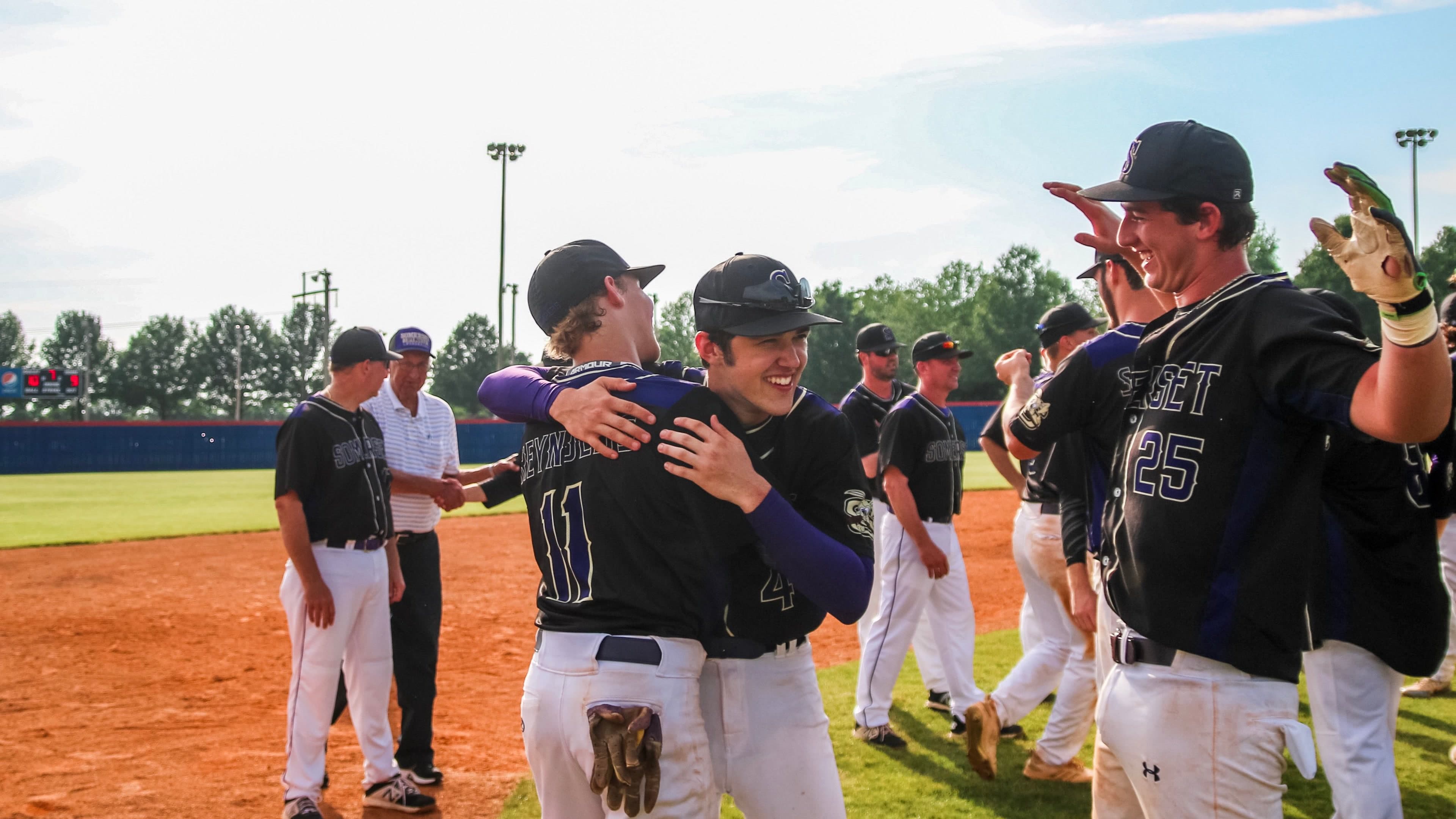
The quieter habits matter too. Watching the game during someone else's at-bat. Knowing the situation. Cheering because you're into it, not because a coach threatened another lap.
Kids notice what we do in the stands, too. If I tune out whenever my own kid isn't batting, I'm showing him that only his part of the game matters.
I've been found guilty of staring at my phone too much.
Coaches set the dugout culture. We can help it carry over at home.
Noticing the good stuff
I've learned this doesn't need a speech.
When you see good teammate behavior in a pro, college, or youth game, a short comment is plenty. "He went right to his pitcher after that error. That helped."
When your own kid does it, tell him you saw it. If he picked someone up after a hard inning, that deserves the same attention as a double.
On the ride home, asking about the rest of the team helps too. Who played well? Who made him laugh? Who needed some encouragement? The right postgame questions can quietly show a kid that the whole team's experience matters.
Talent may earn a roster spot. Being a good teammate is what makes other players glad he's there.
Years from now, nobody will remember his 10U batting average. They'll remember whether he had their back.